From Debate Stage to Operating Room — And Back
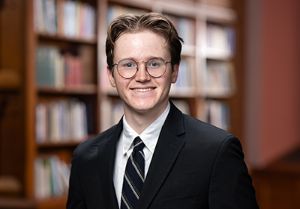
Two global stages bookend Nathan Spencer’s successful fight against a brain tumor and seizures. Nathan had recently turned 19 as he readied to compete at Canada’s prestigious North American Debating Championship for his team, the equally prestigious Princeton Debate Panel. He stood at the dais for his first speech of the first round. But something was wrong.
“I just couldn’t talk for about a minute,” Nathan said. “It’s not like nervousness or anything like that. I’ve been doing this for years and years.”
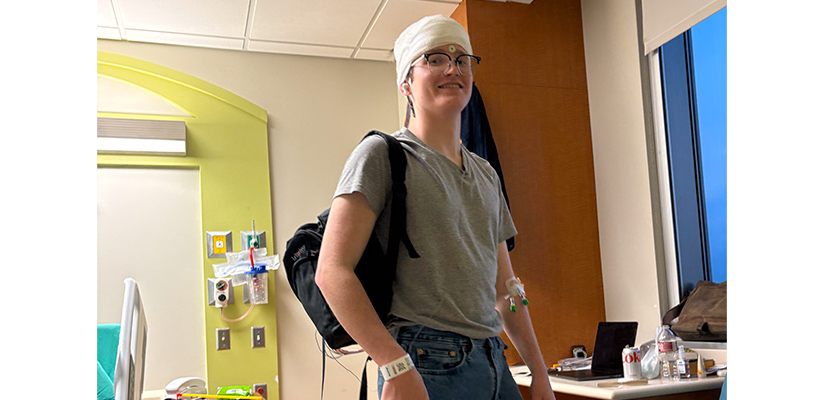
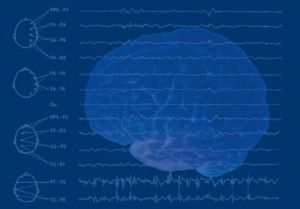
Nathan Spencer spent a week in the epilepsy monitoring unit undergoing continuous video EEG monitoring, allowing his care team to evaluate his seizures in real time.
What Nathan experienced that day was actually a seizure, one of several that had begun affecting his speech. Nathan saw a local neurologist, who originally diagnosed him with Sturge-Weber syndrome, a neurological condition that causes atypical development of blood vessels. An MRI scan showed, however, that Nathan had a 5.5-centimeter brain tumor. Nathan remembers the day well; it was during finals week, and he was worried. His mother, Heather, remembered the day precisely: May 6, National Brain Tumor Awareness Day.
“My knees buckled,” she said. “I felt like our world was crashing down.”
His doctors recommended a watch-and-wait plan, a common approach in cases like Nathan’s. But after the initial misdiagnosis, Heather wanted additional opinions. She reached out to brain tumor support groups and the National Brain Tumor Society for guidance. On one call, a nurse practitioner suggested a pediatric neurosurgeon and offered to help. Even so, Heather spent sleepless nights searching for help — and, she said, leaning on tears and prayer.
“This is the crazy part. The next morning — out of the blue — Dr. Klimo calls me up,” Heather said. Le Bonheur and Semmes Murphey Neurosurgeon Paul Klimo, Jr., MD, MPH, serves as pediatric neurosurgery division chief. “He says, ‘The National Brain Tumor Society contacted me. I’d like to take your son’s case.’ I told him this was either a miracle or a scam.”
The Spencers flew to Memphis after Nathan finished his finals.
Nathan and the Spencers immediately felt better, as Le Bonheur staff had “in two days done more tests than we’d had in 10 weeks.” Within a week, he had a diagnosis: a rare, Grade I pediatric ganglioglioma that had been in Nathan’s brain for around five to 10 years. Le Bonheur Pediatric Neurologist Sarah Weatherspoon, MD, determined the tumor was likely responsible for the seizures. As the tumor slowly grew, it irritated the area of Nathan’s brain that was responsible for speech, triggering brief seizures that temporarily took away his ability to speak.
The team moved swiftly, performing a total resection of the tumor the next day. Recovery took time, and Nathan experienced some lingering swelling that affected his reading and speech. This was a challenge for a competitive debater.
Nathan and his family left Le Bonheur and returned home, where he was coached by a speech therapist from the University of Texas. Although it was an emotional time, his speech and reading comprehension returned in the first weeks of speech therapy.
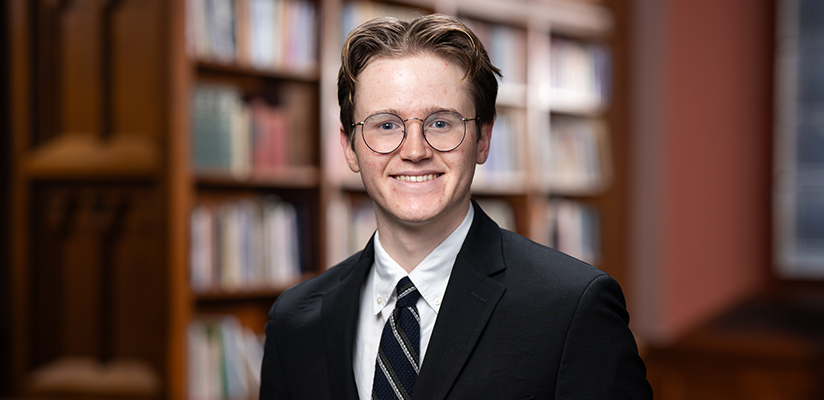
Three weeks after leaving Le Bonheur, Nathan Spencer was back on stage at a debate convivium at England’s University of Oxford. The next week, Nathan returned to school. In early January, he was preparing his internship applications and looking forward to an ethics course and learning Chinese.
Help us provide the best care for kids.
Le Bonheur Children's Hospital depends on the generosity of friends like you to help us serve 250,000 children each year, regardless of their family’s ability to pay. Every gift helps us improve the lives of children.
Donate Now