Coming Home to Heal
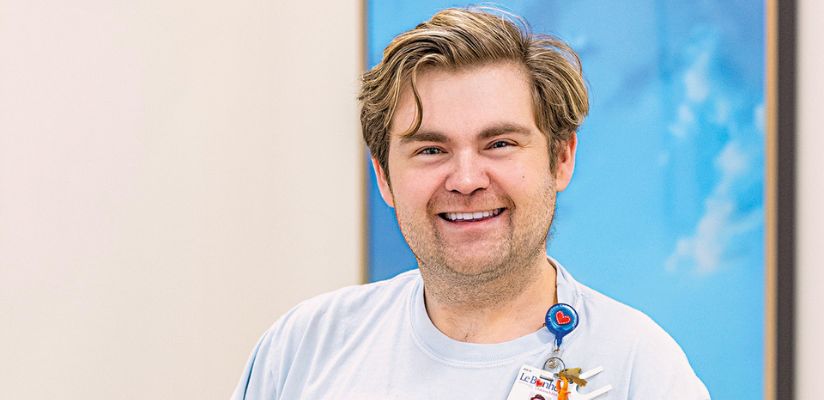
When Matthew Darling, CCRN, steps onto the sixth floor of Le Bonheur Children’s Hospital, there’s a feeling he can’t quite shake — like muscle memory from another lifetime.
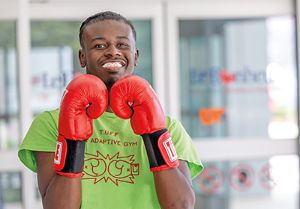
Two decades ago, Matthew was a chronically ill child facing frequent appointments and lengthy hospital stays. Now, more than 25 years after receiving a kidney from his father in a Le Bonheur operating room, he’s a nurse in the hospital’s Intermediate Care Unit (IMCU), caring for children who are facing the same fears he once knew.
Matthew's Story: The Place I Grew Up
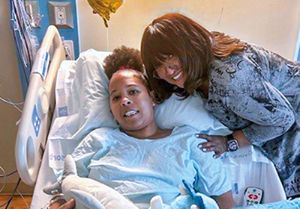
Matthew’s Le Bonheur journey began in 1997, when, at just 3 years old, he was diagnosed with end-stage renal disease. A routine check-up led to a series of urgent tests that revealed his kidney function had plummeted to just one percent. Matthew would need a transplant.
“I went from being a normal kid to being on dialysis within days,” Matthew said. “Le Bonheur became the place I grew up.”
The following March, Matthew received a life-saving kidney transplant from his father — one of many surgeries that marked his childhood. In 2007, he returned for another major operation, this time to remove two lobes of his lung. Through every hospitalization, Le Bonheur’s team became a second family to the Darlings.
“They weren’t just caring for me; they cared for my parents, too,” Matthew said. “They showed up for my life outside the hospital, even coming to Mississippi to see me in school plays. That kind of care stays with you.”
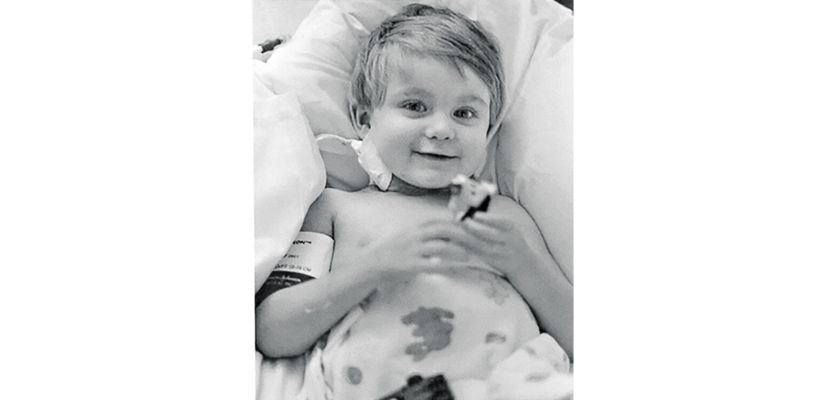
His early experiences at Le Bonheur shaped the man Matthew would become. After initially working as a middle school teacher, he felt a persistent pull toward nursing. Matthew enrolled at the University of Tennessee Health Science Center, completing his clinicals at Le Bonheur.
“It felt like coming home,” he said.
Today, Matthew works night shifts in Le Bonheur’s IMCU, where his personal experience fosters a rare kind of empathy.
“Sometimes it’s hard to understand the emotions that come with a transplant, but I’ve been there,” Matthew said. “Families are often surprised to hear my story, and it helps them know I’m on their side.”
That empathy has become one of his greatest tools as a caregiver.
“The most important part of being a nurse is being a patient advocate,” Matthew said. “If families can relate to me as a person, it allows for better care and understanding. They know I’m here 100 percent for their child.”
A lifelong learner, Matthew is eager to deepen his clinical skillset. He’s Pediatric Intensive Care Unit-trained and working toward critical care certification, with a long-term goal of becoming a transplant coordinator — a role inspired by one of his earliest champions, retired Le Bonheur Transplant Coordinator Sandy Childress.
The most important part of being a nurse is being a patient advocate. If families can relate to me as a person, it allows for better care and understanding. They know I’m here 100 percent for their child.
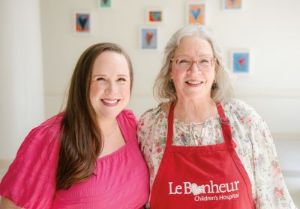
Childress, who served at Le Bonheur for 41 years, cared for Matthew as a child and still keeps in touch with him and his family. “I was so happy when Matthew was hired at Le Bonheur because I knew this was the reason he became a nurse,” she said. “Matthew has lived the life of a transplant patient, and can relate to kids and families in a way few people can.”
Even as he continues to see his nephrologist for routine checkups three times a year, Matthew approaches each day with a sense of gratitude and purpose. He volunteers at summer camps for children with kidney disease, shares his story at fundraising events and offers encouragement to young patients facing long hospital stays.
“There’s a lot of beauty in being a person with a transplant,” Matthew said. “One of the most selfless loves a person can receive is an organ donation. It changes how you see the world — in new colors you might not have seen otherwise.”
Dixie's Story: Full Circle in the OR
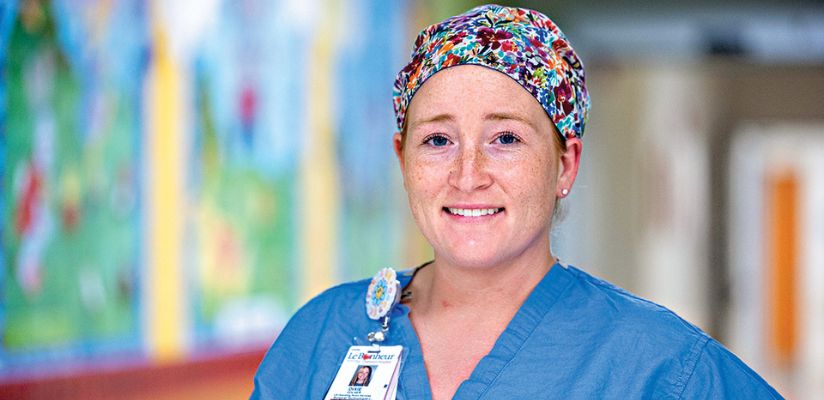
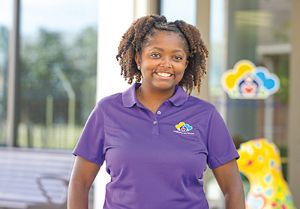
Like Matthew, Dixie Volner knows what it means to walk through Le Bonheur’s doors as a child in pain and come back years later as a caregiver.
During fall break of 2007, 13-year-old Dixie woke up with severe abdominal pain. Doctors at urgent care ran tests but couldn’t determine the cause. Symptoms were chalked up to Dixie’s weight, and physicians urged diet and exercise. Still, her pain and distended stomach persisted.
Finally, a trip to Le Bonheur’s Emergency Department provided answers: a massive choledochal cyst.
Within days, she was in surgery. Pediatric surgeon (and now Le Bonheur President) Trey Eubanks, MD, FACS, spent eight hours removing the cyst, which weighed 8.5 pounds — nearly the size of a basketball.
“The next day, it was like I deflated,” Dixie said. “I woke up with no pain, and I’d lost 20 pounds overnight. I felt like myself again.”
The two-week hospital stay that followed planted a seed: Dixie knew one day, she wanted to be part of a surgical team helping kids like her.
“Everyone took such great care of me,” she said. “They didn’t just make me better — they made me feel safe.”
Dixie enrolled in surgical technology school and set her sights on the single goal of working at Le Bonheur. In January 2024, that dream became a reality when she joined the hospital as a surgical technologist.
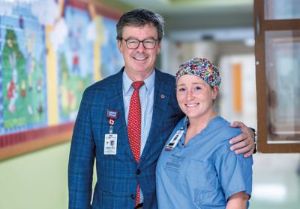
Her first day was overwhelming. “It’s a big place,” she said. “I kept getting lost and wondered how I’d ever find my way around.” But on her first day in the operating room, something extraordinary happened: she was assigned to work alongside Dr. Eubanks, who still practices clinically — the same surgeon who had successfully operated on her years earlier.
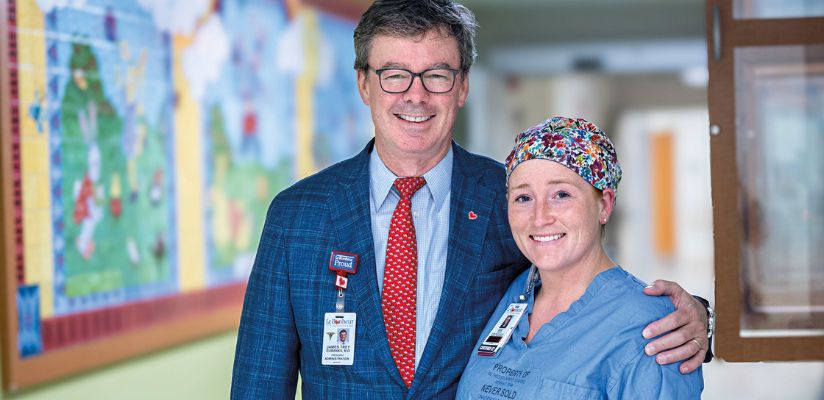
“It felt like God was telling me I was in the right place,” Dixie said.
Now, Dixie spends her days where she feels most at home: behind the surgical table, anticipating needs before they arise and ensuring every procedure runs smoothly.
“I like to be behind the scenes, but I know I’m making an impact,” Dixie said. “To be part of a patient’s story is very rewarding. I know what it’s like to be that patient.”
It’s tougher to work on children, but it’s also more rewarding. I think about how the work we do changes their futures and it’s incredible to be part of that.
Her favorite moments are when she gets to comfort nervous children before surgery — explaining what to expect, assuring them they are safe and offering the same sense of security she once needed herself.
“It’s tougher to work on children, but it’s also more rewarding,” she said. “I think about how the work we do changes their futures and it’s incredible to be part of that.”
For Dixie, every day at Le Bonheur feels like coming full circle: a chance to give back to the hospital that gave her a new lease on life.
“Anything that’s needed of me is what I want to do,” she said. “Helping kids is why I’m here.”
Help us provide the best care for kids.
Le Bonheur Children's Hospital depends on the generosity of friends like you to help us serve 250,000 children each year, regardless of their family’s ability to pay. Every gift helps us improve the lives of children.
Donate Now