Through Both Lenses
For most people entering the halls of Le Bonheur Children’s, the hospital is a place to either give or receive care — but for Rachel Greer and NaTasha Davis, Le Bonheur is both.
As therapists on the hospital’s Rehabilitation Services team and mothers to daughters with special needs, Rachel and NaTasha understand Le Bonheur from two angles: as providers caring for patients and families, and as parents navigating their own children’s care. That dual perspective has imbued both women with a renewed appreciation for the breadth of services Le Bonheur provides — as well as a deepened capacity to connect with the kids and families who come to Le Bonheur in search of healing and hope.
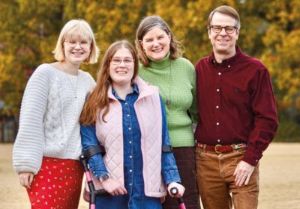
Rachel and Marley: Bridging the Gap
When Rachel Greer, OTR/L, began working as an occupational therapist at Le Bonheur in 2012, she thought she understood what it meant to walk alongside families as they navigated life with a medically complex child.
What she didn’t know then was how personal that journey would become.
Three years into her career, Rachel and her husband, Josh, welcomed their first child, Marley. The pregnancy was uneventful, but at birth, the Greers were surprised by Marley’s diagnosis of Down syndrome.
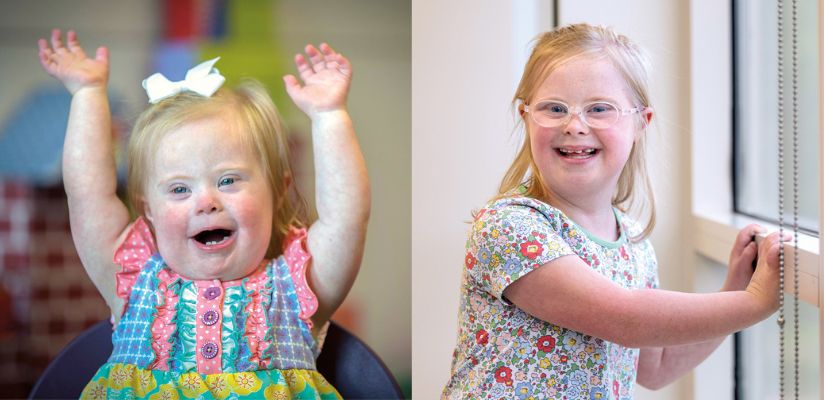
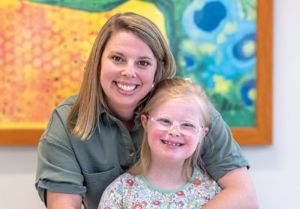
Right: Marley Greer, age 10, has received specialized support and therapeutic services from Le Bonheur since birth.
Today, Marley is an outgoing third-grader who participates in dance, gymnastics, Girl Scouts and special needs T-ball.
“I needed time to process and adapt to the news,” Rachel remembers. “I credit Le Bonheur’s early intervention team with helping me through Marley’s first year of life. The inclusion support and early intervention teams were the net that caught me when I was free falling. They gave me hope. They became our family.”
That early safety net set the tone for Marley’s childhood. From birth to age 3, she worked with therapists in speech, occupational and physical
therapy through Le Bonheur’s inclusion support program and early intervention services. Rachel describes that support as pivotal not just for
Marley, but for her as a new mom.
“The inclusion support team even helped bridge the gap so I could return to work while Marley went to daycare,” Rachel says. “They met with directors and teachers, created goals and came onsite to guide staff. It was a huge resource that many people don’t even know exists.”
Today, Marley is 10 years old and thriving. An outgoing third-grader, she spends part of her day in a general classroom and part in specialized instruction. Marley also keeps a social calendar as full as any child her age — from Girl Scouts and dance to gymnastics and special needs T-ball.
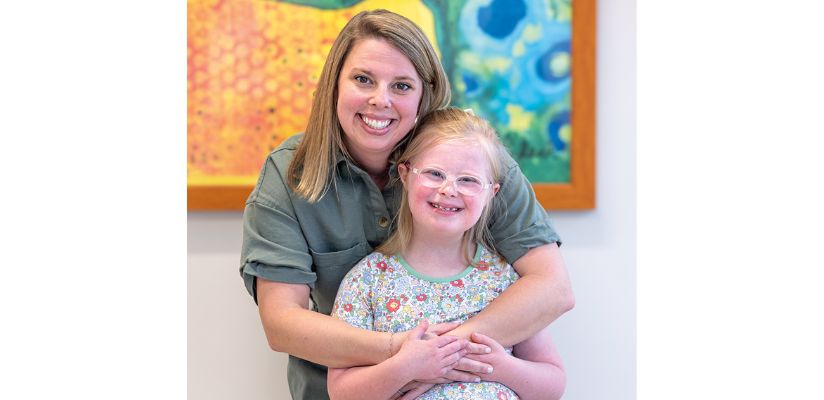
“Marley has been treated like a typical kid from the beginning, and that’s because of Le Bonheur,” Rachel said. “Because of that, Marley sees herself as a typical kid. She does all the things her peers do.”
Her care team at Le Bonheur helps make that possible. Marley sees specialists in endocrinology, cardiology, ENT and ophthalmology annually, in addition to the therapeutic interventions she received as a young child. Along the way, Rachel says her daughter’s providers have always gone out of their way to connect directly with Marley, making sure she is included in her own care.
The inclusion support and early intervention teams were the net that caught me when I was free falling. They gave me hope. They became our family.
“We have this great hospital, but it’s the people inside the hospital who make it great,” she says.
Her experiences with patient- and family-centered care have shaped Rachel as a therapist. Now part of the occupational therapy team at Le Bonheur Outpatient Center East, she works with children from infancy to young adulthood, helping them build skills for feeding, fine motor tasks, gross motor skills and greater independence.
Sometimes she meets families for just a few months; other times she works with them for years. In every case, Rachel brings a unique
empathy to the role.
“I joke sometimes that I’m living a double life,” she says with a smile. “I can see through both lenses now. I know what it’s like to be a provider, but also what it’s like to be a parent in this hospital. Families feel comforted when I share my story. I think it helps to know I truly understand the extra stressors that come when you have a child with special needs.”
That perspective also allows her to point families to community resources they might otherwise be unaware of, such as adaptive sports, inclusive programs and supportive networks across Memphis.
Rachel knows how vital those connections are for caregivers — places they can go to feel supported so they, in turn, can better support their children. Rachel views Le Bonheur as one such place, and credits her colleagues throughout the hospital community for standing by her side, both personally and professionally.
“I love the people at Le Bonheur,” she says. “The team I work with has been there for me through all the seasons of life — through Marley’s birth and the challenges that have come with that. I couldn’t do this without them.”
NaTasha and Phoenix: Celebrating Every Win
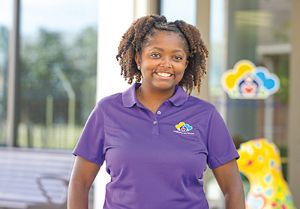
For Speech Language Pathologist NaTasha Davis, MS, MCD, CCC-SLP, that same dual perspective comes alive in her daughter’s story — and every time she walks into a patient’s room at Le Bonheur. Beyond her role as a therapist, NaTasha carries the lived experience of a mother whose child has spent long days in hospital rooms, undergone multiple open-heart surgeries and defied the odds with every milestone.
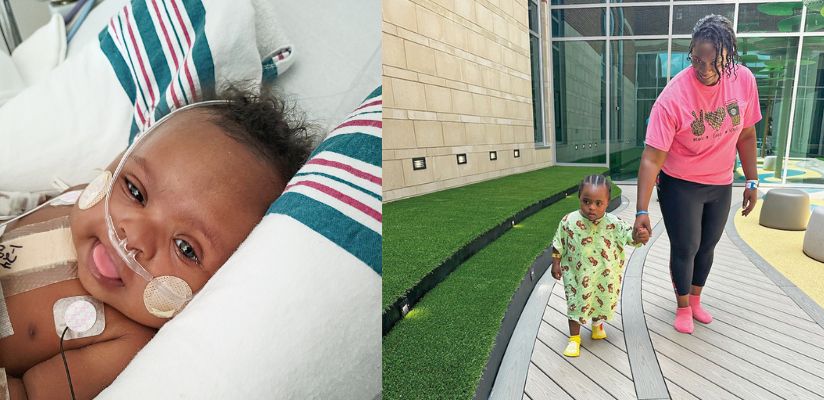
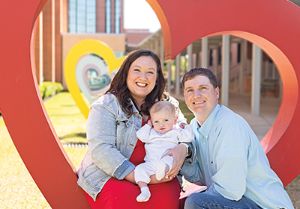
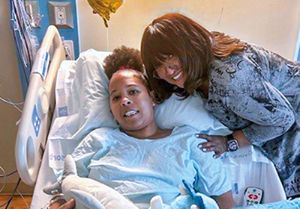
Right: In 2024, Phoenix Davis underwent her second heart surgery at Le Bonheur. Above, she and her mom, NaTasha, explore the hospital’s new CVICU courtyard during Phoenix’s post-operative recovery stay.
NaTasha’s daughter, Phoenix, is 4 years old. Phoenix is outgoing, curious and quick to charm her care team, but her journey to this point has been anything but smooth. Born with Down syndrome and a complex congenital heart defect, Phoenix faced serious challenges immediately after she was born.
NaTasha remembers the moment the gravity of her daughter’s condition came into focus during a conversation with Phoenix’s cardiologist at Le Bonheur. “Dr. Joshi sat with me and drew a picture of a typical heart, then drew what Phoenix was missing. He explained every step, and he made sure I felt heard,” she recalls. “That compassion mattered as much as the information.”
Phoenix amplified my voice and made me more compassionate. She gave me the ability to connect with families in a way I couldn’t have before.
At 3 months old, Phoenix underwent her first open-heart surgery to repair an AV canal defect and Tetralogy of Fallot — a combination of four congenital heart defects affecting the flow of blood between her heart and lungs. Phoenix stayed in Le Bonheur’s Cardiovascular Intensive Care Unit (CVICU) and then the pulmonary floor for nearly two weeks. “The staff included me in rounds, answered my questions and treated me like a partner in my daughter’s care,” NaTasha says. “That made a huge difference.”
Phoenix’s resilience carried her through a difficult recovery, but her story didn’t end there. During the summer of 2024, she underwent a second surgery to address severe subaortic stenosis. This time, the Davis family experienced the hospital’s newly renovated CVICU.
“The new rooms and waiting areas were beautiful, and it was nice having a courtyard where we could step outside and get fresh air,” NaTasha says. “It may sound small, but when you’re living in the hospital with your child, those things matter.”
Today, Phoenix returns to Le Bonheur for regular follow-ups with cardiology, ENT, ophthalmology and endocrinology. She is thriving in therapies, growing into her own independent personality, and, according to her mother, “loves coming to Le Bonheur.”
For NaTasha, her experiences as a Le Bonheur mom have permanently shaped the way she practices. Every swallow exercise, every session helping a child find their words, is infused with a perspective that blends professional skill with lived empathy.
“Having a patient here has made me more compassionate and in tune with what families need,” she explains. “I know how overwhelming it can feel. That’s why I tell parents: celebrate every victory. Every new skill, every tiny step forward — it all matters.”
That encouragement has become one of NaTasha’s hallmarks as a therapist. Parents feel comforted when she shares her own journey, knowing she has stood where they are standing. “Phoenix amplified my voice and made me more compassionate,” NaTasha says. “She gave me the ability to connect with families in a way I couldn’t have before.”
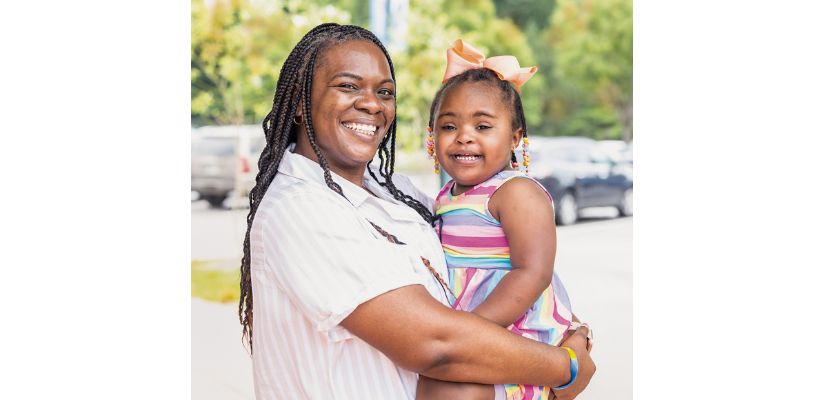
Through Phoenix’s story, NaTasha has discovered that care is never just procedures or therapies. It’s the people who walk alongside you — the doctors who take time to draw a picture, the nurses who invite you into rounds and the therapists who celebrate small wins.
Beyond her clinical work and Phoenix’s care, NaTasha is using her voice as a strong advocate for children with Down syndrome. She participates in boards and community groups, lending her perspective to amplify the needs of families across the region.
Still, the path always leads back to Phoenix. Her daughter’s courage and joy are daily reminders of why NaTasha chose this work in the first place — and why she continues to bring her whole heart to it.
“Every family deserves to feel heard and supported,” she says. “That’s what Le Bonheur gave me, and it’s what I want to give to others.”
A Chance for Connection
For Rachel and NaTasha, Le Bonheur has become more than a workplace; it’s a safe haven where their professional and personal lives intersect in the most profound ways. As therapists who’ve seen the relief in a fellow parent’s eyes, celebrated a child’s first word, and navigated quiet moments of uncertainty alongside families who are learning to hope again, their own daughters’ journeys have given them a lens of empathy few can claim.
And in every therapy session, every conversation with a child or parent, and every milestone reached, their maternal perspective shines through: a reminder that care is not just a clinical service, but a chance for connection — and sometimes, the truest connection comes from walking in both shoes at once.
Help us provide the best care for kids.
Le Bonheur Children's Hospital depends on the generosity of friends like you to help us serve 250,000 children each year, regardless of their family’s ability to pay. Every gift helps us improve the lives of children.
Donate Now