Hope in Every Lesson
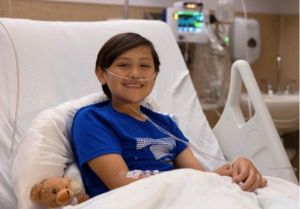
Elizabeth Lasley, fondly known as Zib, was born with a rare congenital condition called an omphalocele. Her internal organs developed outside of her body. While Zib received expert medical care during her 149-day stay at Le Bonheur Children’s Hospital, her mother, Erin Lasley, MEd, noticed her daughter was missing key developmental milestones.
After three years of follow-up care and appointments for Zib, Lasley became deeply involved in the hospital community. With her teaching background and passion for advocacy, Lasley embraced her next Le Bonheur journey — helping launch Le Bonheur’s new education initiative, All Kids Academy, serving as its coordinator.
All Kids Academy is an innovative program that supports and expands learning in the hospital by preparing the educators of tomorrow to support children with special health and developmental needs. It’s a collaborative effort among Le Bonheur Children’s Hospital, the University of Memphis and the University of Tennessee (UT) Health Science Center.
A renewed vision for hospital-based education
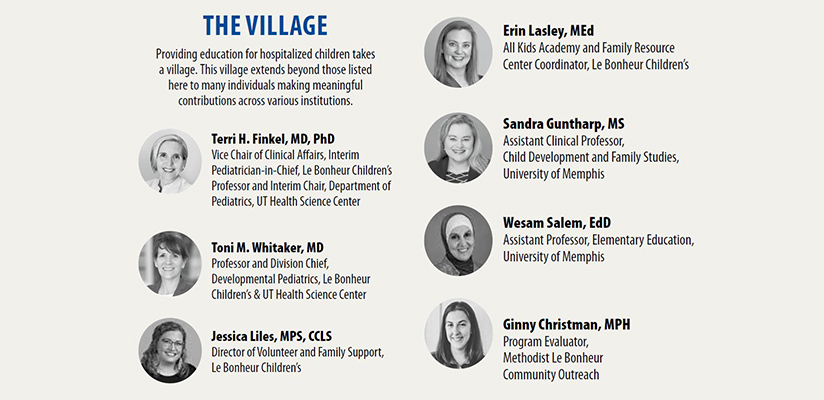
“Education shouldn’t stop when a child walks through our hospital doors,” said Terri Finkel, MD, PhD, vice chair of Clinical Affairs and interim pediatrician-in-chief at Le Bonheur. Inspired by a program she helped launch at a Florida children’s hospital, Finkel began exploring how to bring a similar education model to Le Bonheur. The first step was finding the right partners.
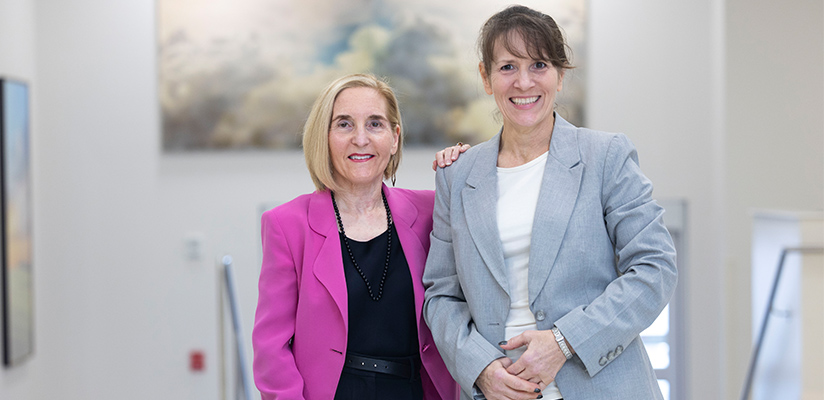
Le Bonheur Vice Chair of Clinical Affairs Terri Finkel, MD, PhD (at left), and Le Bonheur Chief of Developmental Pediatrics Toni Whitaker, MD (at right), are the physicians who lead All Kids Academy. Their goal is to support children’s education and development needs while in the hospital.
Finkel approached Toni Whitaker, MD, Le Bonheur's chief of Developmental Pediatrics, who has seen how complex health conditions and prolonged hospital stays can impact children. “When I worked as an inpatient physician, I saw firsthand how developmental issues were often separate from a child’s medical care, and it lingered in my mind for years,” said Whitaker.
They worked together with Le Bonheur’s Director of Volunteer and Family Support, Jessica Liles, to identify how to better support education within the hospital. The University of Memphis (UofM) Child Development and Family Studies program became a partner in the creation of an internship program for future educators and early childhood professionals. To bring the vision to life, the team secured funding through a grant from Memphis’ Urban Child Institute. Additional support comes from the federally funded UT Health Science Center Leadership Education in Neurodevelopmental Disabilities (LEND) training program, philanthropic donors and partner institutions.
“Aside from providing educational and developmental support, our secondary mission is building a workforce in early childhood education and getting them comfortable and familiar with children with chronic or complex medical conditions,” said Whitaker.
Transforming the hospital experience
Since launching in 2023, All Kids Academy has embraced a dynamic model that integrates early literacy, developmental and caregiver support for children from birth to 5 years old into the hospital setting. This program is expanding the care team, allowing clinicians to focus on patient care, while All Kids Academy provides those childhood moments.
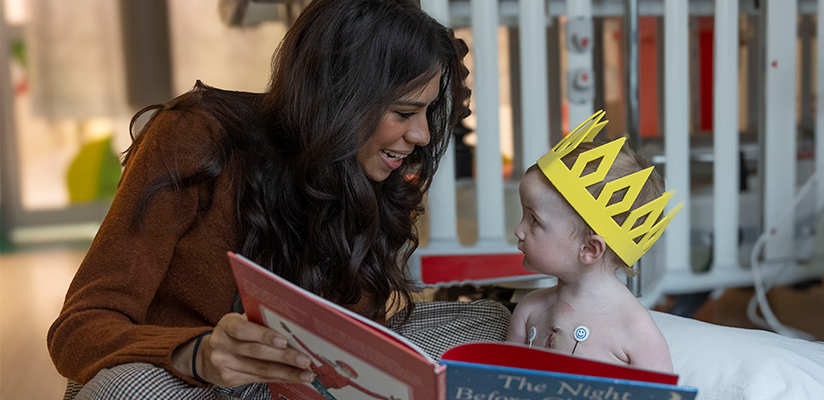
Above, University of Memphis intern Sophia Gonzales (left) holds a session with a patient in his hospital room.
Each week, Lasley and Sandy Guntharp, MS, UofM assistant clinical professor in Child Development and Family Studies, review patient cases and develop individualized education plans using the Centers for Disease Control and Prevention (CDC) Milestone Moments, a list of typical developmental milestones by age, as a guide. Education becomes a vital part of the child’s care plan.
UofM students get hands-on experience working with young children who have complex medical and educational needs. “We’re filling in the gaps of a typical childhood and providing that peer connection, play and even positive touch,” said Sophia Gonzales, a UofM intern working with All Kids Academy. “These are things that hospitalized children often miss.”
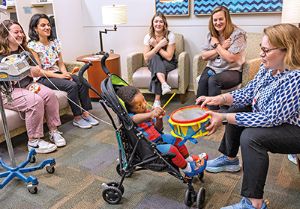
Sessions typically range from 15 to 45 minutes, depending on the child’s age and how they’re feeling. For younger children, activities like reading, singing and sensory play stimulate development. Group activities like Circle Time and music group provide additional learning opportunities and social interaction.
When possible, the team tries to get children moving around or outside of their room. “This work also supports the child’s mental health. We’re giving kids and their parents a sense of control,” said Lasley.
Outcomes that matter
The impact is profound. Lasley recalls one long-term patient who was withdrawn and anxious, reluctant to leave her room or interact with others. “We kept showing up, offering play and connection,” she said. “Over time, we saw her blossom, her personality emerged, and she began engaging with the world around her.”
All Kids Academy is more than an education program; it’s a lifeline for children and families navigating the challenges of hospitalization. By bringing the joys and rhythms of childhood into the hospital, it helps young patients heal not just physically, but emotionally and developmentally.
“The work of All Kids Academy feels very human, positive and good for our healthcare professionals. Our clinicians are so busy, and when our trainees can have an extra moment to think about patients as kids, it’s really great to see that side of a child’s care,” said Whitaker.
It’s only the beginning
As All Kids Academy continues to grow, so does its influence. Resident physicians have collaborated with the All Kids Academy team, observing interns and faculty during their Developmental Pediatrics rotations. Residents also help promote and evaluate awareness of the program’s reach among medical providers.
As community partnerships and institutional support continue to expand, the momentum is undeniable. All Kids Academy started with the recognition that healing involves more than medicine. “We’ve seen a shift in mindset,” said Lasley. “Medical care is essential, but so is developmental play, social connection and emotional support.”
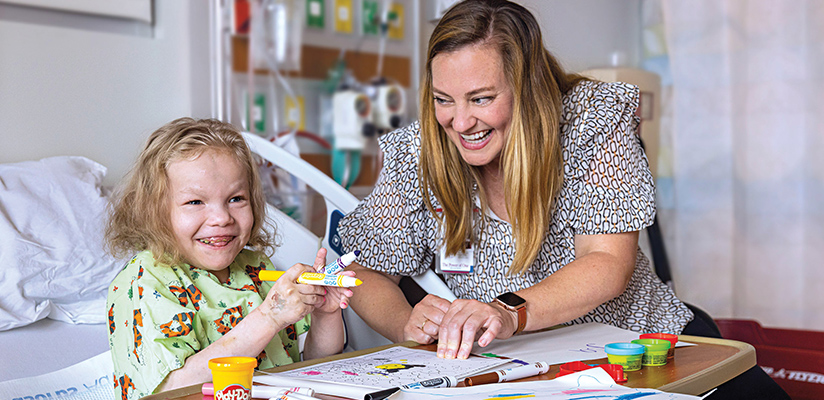
All Kids Academy Coordinator Erin Lasley (right), who has an extensive educational background, became involved at Le Bonheur and All Kids Academy after her daughter’s long hospital stay. Above, she holds an education and development session with a patient.
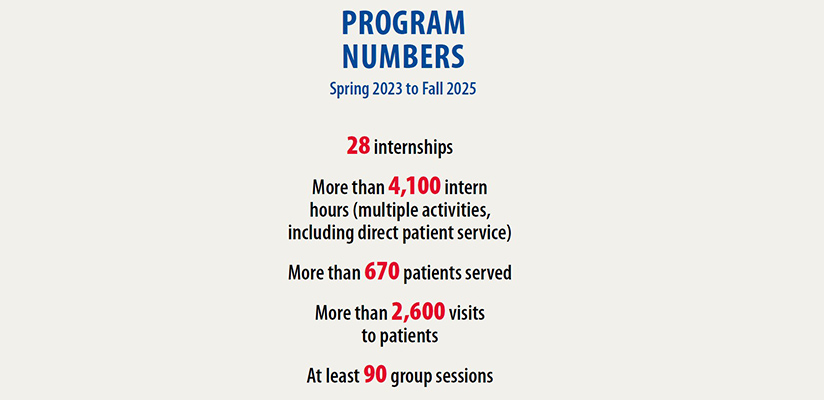
Le Bonheur’s journey to becoming a school-friendly health system is just beginning. Since 2023, All Kids Academy has served more than 670 children, and each one represents a life touched, a story changed.
This program is a compassionate response to the invisible toll hospitalization can take on a child’s development. “Every encounter is a child whose world expanded beyond the hospital walls,” said Liles. “We’re not just teaching, we’re transforming lives.”
Help us provide the best care for kids.
Le Bonheur Children's Hospital depends on the generosity of friends like you to help us serve 250,000 children each year, regardless of their family’s ability to pay. Every gift helps us improve the lives of children.
Donate Now