Changing What’s Possible
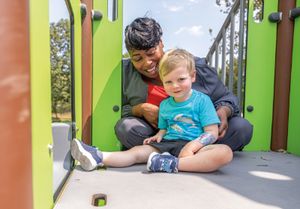
When Lane Harris started daycare at 6 months old, his routine looked a lot like that of the other children in his classroom. He played. He made friends. He learned. He took naps.
And, like the other babies and toddlers, he was fed by his caregivers — with one meaningful difference. Lane’s meals came through a G-tube, a feeding tube that delivers nutrition directly to his stomach.
For the staff at Lane’s childcare center, caring for a child with his medical and developmental needs initially felt daunting. Uncertainty about how to safely meet those needs can become a barrier to inclusion for many childcare centers.
Thankfully for Lane and his family, Le Bonheur’s Inclusion Support team was there to help bridge the gap.
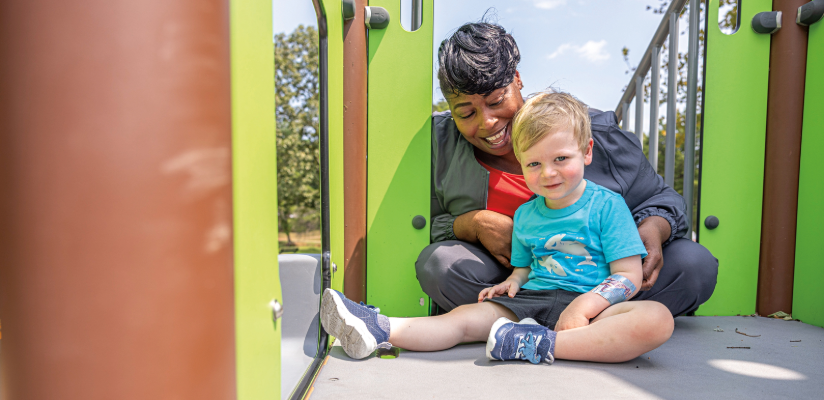
Community Health Educator Shondra Rias has been with Lane since he was 6 months old. She trains his caregivers, provides onsite support for his care and communicates regularly with his parents and school staff. Each time Lane transitions to a new classroom, Shondra provides training to a new group of teachers.
For Lane’s parents, Erin and Zeke Harris, this support has made something profoundly important possible: their son can attend daycare and preschool alongside other children his age while both parents continue working full time.
“The Inclusion Support team has been incredible,” Erin says. “They’re the reason that both me and my husband are able to work full-time jobs and Lane is able to go to school with any other typically developing child his age.”
That is the heart of Le Bonheur’s Inclusion Support program: helping children with medical needs and developmental delays participate in typical childcare settings — and helping their families continue working, going to school and building their lives. As the only Inclusion Support program of its kind in the country, Le Bonheur is making a difference for children and their families every day.
Bridging the Gap
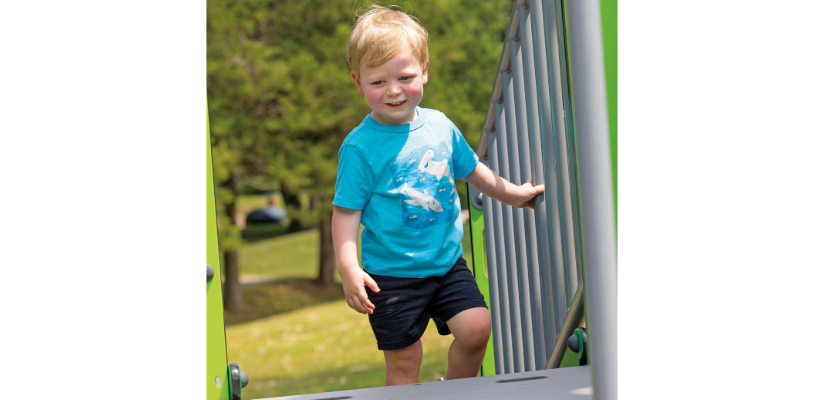
participate alongside his peers.
Inclusion Support serves children from birth through age 5 who have exceptional medical or developmental needs and require additional support to participate safely in a childcare setting.
The program receives referrals from physicians, therapists and other providers. Once a child is referred, the Inclusion Support team connects with the family and childcare center, reviews the child’s medical and developmental needs, obtains necessary health and immunization records, and provides individualized education and training.
The team may also teach childcare staff how to manage a G-tube, administer medication, respond to seizures or allergies, use an EpiPen, safely provide thickened liquids or support a child with developmental or behavioral needs.
And the support doesn’t stop after training.
Carey Wright, RN, Inclusion Support nurse case manager, describes her role as a “collaborator of care” rather than traditional hospital case management.
“In my role I can serve as a triage person, bridging the gap between the community and the hospital,” she says. If a child is having an issue with a G-tube, for example, Carey may be able to troubleshoot the concern directly with clinic staff rather than requiring the parent to make an appointment, take time off work and bring the child to the hospital.
“After we teach all the things involved in a child’s care, we stay connected and retain those relationships,” says Carey. “Even once you’re signed off to do this independently, we’re still there providing support.”
That ongoing relationship is one of the program’s greatest strengths. Inclusion Support is not simply teaching a childcare center how to perform a medical task or behavioral accommodation. It’s creating a network of people who feel capable of caring for a child — and giving the family confidence that their child is safe.
And, incredibly, there is no charge. The program is provided at no cost to families or childcare centers, including the education and training provided to caregivers.
A Different Kind of Therapy
While school-based therapy supports a child’s developmental needs in and after kindergarten, Inclusion Support helps create the conditions that allow a young child with medical or developmental needs to participate in a typical childcare environment in the first place. The team often collaborates with pediatricians, outpatient therapists and Tennessee Early Intervention System providers while helping childcare staff at centers throughout Shelby County safely support children throughout the day.
For Erin, who is a physical therapist, this integration of services and school is critical.
“Having hands-on support for Lane at school is great because he’s getting the same education as his peers,” she says. “He’s also able to be around other kids his age, and that’s so important for development, as well.”
That benefit extends beyond the children receiving Inclusion Support, as Shondra and other program staff have experienced firsthand.
“Whether I’m doing a G-tube feeding, assisting with fine motor skills or helping a child engage in activities during free play, other children will often ask questions,” says Shondra. “I always answer their questions and talk openly about what I’m doing, so they become accustomed to it and it becomes routine.”
Carey remembers a new student at one of the program sites asking about another child’s G-tube feeding.
“I said, ‘This is her milk. It goes straight to her tummy because she can’t swallow it like you do,’” Carey recalls. “The child said, ‘So she can’t talk?’ And I said, ‘No, she can talk—just ask her a question’.”
The new student did exactly that, asking the other child her name and exchanging introductions before walking away.
These moments can be simple, but they matter. Children learn that differences are part of everyday life. They learn to ask questions. They learn how to help a friend who needs a little extra support. Inclusion, in other words, becomes part of the classroom culture.
We are the traveling inclusion team. We go wherever we are needed to help support children and families.
When “Possible” Changes
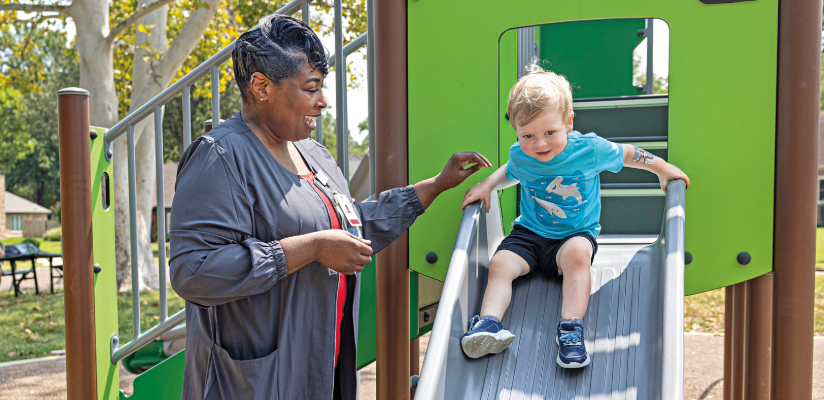
and medical support to young children at childcare centers across Shelby County.
Lane’s story illustrates what inclusive support can mean for one family.
Lane’s early days were medically complicated. After a normal pregnancy and delivery, he developed apnea, or a temporary lapse in breathing, at just 6 days old. His oxygen levels dropped dramatically, and Lane spent more than a week in the Pediatric Intensive Care Unit at Le Bonheur. He was diagnosed with hypoxicischemic encephalopathy, or HIE, and later developed significant swallowing difficulties. At 6 weeks old, after failing a swallow study, Lane received a G-tube. The months that followed brought frequent respiratory illnesses, sleep apnea, nighttime oxygen and other complications.
Still, Lane started daycare at 6 months old.
Over the next two years, Inclusion Support helped him move through two infant rooms and two toddler rooms, with Shondra training each new group of caregivers.
Then, this spring, another challenge arrived.
Lane fractured his femur and spent five weeks in a spica cast, a specialized body cast to immobilize his legs so they could heal, which required him to use a stroller and adaptive seating. The childcare center was understandably hesitant about how to safely manage his needs under these new conditions.
Lane’s parents, who both work full-time, were also in the middle of a move and Erin was 22 weeks pregnant with twins. Without hesitating, the Inclusion Support team stepped in.
“For the three weeks he was at school with the cast on, we were there the entire time,” says Melissa Smith, Inclusion Support supervisor. “We told the family, ‘Whatever it takes for him to stay in the classroom, we will be there.’”
Team members rotated in so that someone was present from the time Lane’s parents dropped him off until they picked him up. Erin remembers Shondra’s support during that period as a key reason her family could keep moving forward.
“She made sure everything was ready to go, even providing an in-service for the teachers,” Erin says. “Shondra was there every day to make sure Lane had what he needed, that the daycare could still support his needs.”
For Shondra, the reason was simple.
“Both parents work, and all they wanted was for their son to be able to continue attending school,” she says. “So that’s just what I do.”
You can have your normal life, you can keep your job, you can keep your hours and schedule. This team is there to help make sure your child’s safe and fed and in an environment where they’re able to thrive. You don’t have to stay home and you don’t have to feel like your child’s missing out on these things other children are doing.
A Program Born from Possibility
Today, a team of seven — including five facilitators, a nurse case manager and the program supervisor — serves approximately 350 children each year across Shelby County, up from 200 children in early 2024. And from July 2025 through June 2026 alone, the team trained 972 individuals at childcare centers across the county.
Those numbers represent an extraordinary evolution for a program that was the unexpected answer to a difficult question: What happens to children who need additional support when the hospital’s onsite childcare center closes?
Inclusion Support grew out of Le Bonheur Early Intervention and Development, or LEAD, where team members including Shondra, Melissa, Carey and LEAD director Jill Rogers once worked directly in an integrated childcare setting on the hospital’s main campus. Jill still remembers the uncertainty when the onsite childcare center closed in 2009.
“It was such a sad day when we closed our onsite daycare because we thought, ‘Who is going to take care of these children?’” she says.
Ever resilient, the team found another way forward.
“When we were in the hospital, we were classroom teachers, and our classroom was integrated with typically developing children as well as children with special needs,” says Shondra. “But with Inclusion Support, we’re able to service more children, support more families and extend our reach to more childcare centers.”
By bringing Le Bonheur’s expertise into childcare centers throughout the community — and training caregivers to eventually provide that support independently — the program could reach far more children than a single onsite center ever could.
“What’s very rewarding about it for me is seeing parents be able to go back to work and school and know that their child is well cared for while they’re doing what they need to do to provide for their family,” says Jill.
The Ripple Effect
Every day, Le Bonheur’s Inclusion Support team quietly changes lives for the better without fanfare or ceremony.
A child can go to daycare.
A parent can show up for work.
A teacher who was once afraid of a G-tube learns how to provide a feeding safely.
A class learns that a child who does something differently is still a friend.
And when a child becomes more self-sufficient, the Inclusion Support team moves on to the next child, the next family and the next childcare center.
“We are the traveling inclusion team,” Melissa says. “We go wherever we are needed to help support children and families.”
That commitment and reach matters deeply in a community where many families already face significant barriers to childcare, employment and education.
For some parents, Inclusion Support can mean the difference between remaining in the workforce and having to leave a job. For others, it can mean continuing an education or simply knowing that their child has a safe place to learn, play and grow alongside peers.
And for children, it can mean something that sounds deceptively simple: being a kid, in community with other kids.
Growing, One Milestone at a Time
Today, Lane is out of his cast and walking again. He continues to receive speech and occupational therapy, and he is reaching new milestones on his own timeline.
Over the summer, he was preparing to begin something new at school: drinking water from a straw cup.
It’s a small milestone in the context of everything Lane has overcome, but small steps and simple accommodations may be precisely the point.
The goal of Inclusion Support is not to make children just like their peers. The goal is to help remove barriers that might prevent kids from being with their peers in the first place.
Eventually, Lane will no longer need Shondra beside him every day. When that happens, the knowledge she has shared with his teachers, the confidence she has helped build and the relationships she has formed with his family and caregivers will remain.
And Shondra will take what she has learned to another classroom, another child and another family. That’s how inclusion takes root: one child, one caregiver and one newly possible ordinary day at a time.
“I want families whose children may be struggling developmentally to know that Inclusion Support is available to them,” says Erin. “You can have your normal life, you can keep your job, you can keep your hours and schedule. This team is there to help make sure your child’s safe and fed and in an environment where they’re able to thrive. You don’t have to stay home and you don’t have to feel like your child’s missing out on these things other children are doing. Help is available, and it’s made such a difference for our family.”
Help us provide the best care for kids.
Le Bonheur Children's Hospital depends on the generosity of friends like you to help us serve 250,000 children each year, regardless of their family’s ability to pay. Every gift helps us improve the lives of children.
Donate Now