Hope at the Genetic Level
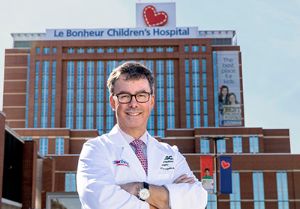
Le Bonheur Children’s Hospital Chief of Pediatric Neurology James Wheless, MD, and his team are part of a groundbreaking clinical trial, published as the lead article in The New England Journal of Medicine, that targets the genetic root cause of Dravet syndrome, a rare and devastating form of epilepsy that begins in early childhood.
“It was the first time ever in the treatment of epilepsy that something like this had been done,” Wheless said. “To look at not only efficacy — is it going to help their seizures — but are they better in other ways such as cognition and behavior. That’s what made this study unique from a practical standpoint.”
In the past 35 years, Wheless has served as an investigator on nearly every major epilepsy treatment brought to market — more than 180 trials in total. This depth of experience, combined with the expertise of a Level 4 comprehensive epilepsy program, led Le Bonheur to be selected as one of only a handful of sites nationwide to participate in the recent Dravet syndrome trial.
Across multiple centers including Le Bonheur, 81 patients were enrolled in phase 1 and 2a studies to test the safety and efficacy of the drug zorevunersen. Results showed that patients saw a dramatic 58.82% to 90.91% drop in seizures with only mild to moderate adverse events.
Understanding Dravet Syndrome
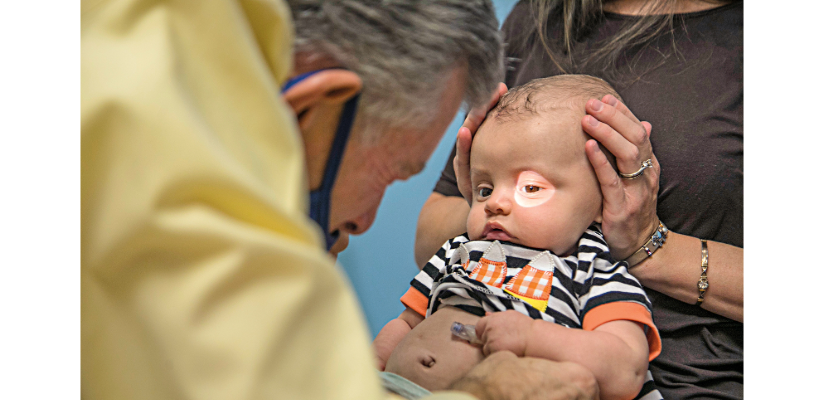
Dravet syndrome is a severe genetic epilepsy that typically appears in infancy. Children experience frequent, prolonged seizures — often resistant to standard medications — along with developmental delays, speech challenges, behavioral issues and problems with motor skills. Even when seizures are controlled, many children experience a decline in cognitive and functional abilities.
For years, treatment has focused on managing those symptoms, primarily the seizures. But advances in genetics have transformed how doctors understand the disease. Researchers can now identify the specific gene mutations responsible, part of a rapidly growing list of hundreds of genetic causes of epilepsy.
For Dravet syndrome, this is the SCN1A gene. While most people have two copies of the gene, children with Dravet syndrome have just one normal copy. This gene controls production of a protein needed to move sodium within brain cells that is critical for proper brain function.
“With the realization that we could test and say, ‘This is what’s causing your epilepsy,’ that led to the next obvious thing that you could possibly ask me as a parent of that child: ‘What can we do about it?’” said Wheless.
A New Kind of Treatment
The new therapy tested by the Le Bonheur team, called zorevunersen, now offers a promising answer to that question.
The therapy tested in the recent trial uses an antisense oligonucleotides (ASOs), a class of treatments designed to target ribonucleic acid (RNA) and modify how disease-related genes are expressed, helping to correct the underlying biology of the disease.
For Dravet syndrome, zorevunersen works by increasing the production of the functioning SCN1A gene to produce as much as twice the amount of protein to restore protein levels to a more normal functional amount. The drug is delivered directly to the spinal fluid so that it can reach the brain.
The trial marked a major milestone: a first-in-human study of this kind of gene-targeting therapy specifically for epilepsy — and one conducted in children, where the disease does its most significant damage.
With the realization that we could test and say, ‘This is what’s causing your epilepsy,’ that led to the next obvious thing that you could possibly ask me as a parent of that child: ‘What can we do about it?’
The Results
The children enrolled in the study were already receiving the best available treatments. Even so, they continued to experience frequent seizures, often daily to weekly. Patients in the study had to have at least one seizure per week to qualify to participate. In total, more than 80 children and adolescents with Dravet syndrome participated in the early phases of the trial, with most continuing into long-term follow-up.
Each patient visit can involve up to 15 to 20 people — physicians, nurses, study coordinators, pharmacists, neurosurgeons, anesthesiologists, radiologists and regulatory specialists. Delivering the therapy requires precision and coordination, from preparing the medication to safely administering it into the spinal fluid.
Depending on the study phase, patients received one to three initial doses of the therapy, with many continuing on a maintenance schedule of repeat dosing every four months.
The initial phase of the trial focused on safety, gradually increasing doses while closely monitoring patients. It was safe — no serious side effects. The trial was cleared to continue.
It worked.
By the second injection, families told Wheless they had never experienced that level of improvement before. Seizures were reduced or stopped on their own. This had never happened before, they told Wheless. They had always had to go to the emergency department for medicine to stop the seizures once they began.
“There were some kids early on that we could tell, wow, this is going to be a gamechanger,” Wheless said.
The study results showed that seizures were reduced by anywhere from 58.82% to 90.91%, a dramatic improvement for patients already on optimized care.
Even more striking were the changes beyond seizures. Historically, children with Dravet syndrome experience a gradual decline in areas like communication, cognition and motor function. In this trial, that pattern was not only stopped — it reversed.
“For some of these kids, they were literally saying the first couple of words to their parents they’d ever heard them say,” Wheless said.
Handwriting improved. Cognition improved. Children who may have appeared uncoordinated kicking a soccer ball now looked smooth, no longer standing out from their peers. For families, the changes were life-altering.
Looking Ahead
The success of the initial trial has already led to the next phase: a larger study aimed at securing broader approval from the U.S. Food and Drug Administration (FDA) and expanding access to more patients.
But the implications reach far beyond Dravet syndrome. Wheless believes this approach represents the beginning of a broader transformation in neurology — one driven by the ability to identify and target genetic causes of disease.
“The technology that’s allowing us to diagnose genetically based epilepsies is really exploding,” said Wheless. “That’s really going to skyrocket over the next five years across all of neurology, not just epilepsy, but to other disorders in the past that we thought we couldn’t treat.”
Instead of managing symptoms, doctors may be able to change the trajectory of a disease — preserving development, improving quality of life and reducing the long-term burden on families. But there is more work to do.
“We still have kids that need better treatments,” Wheless said.
But for families who have spent years navigating the uncertainty of Dravet syndrome, the Le Bonheur team has produced something that once seemed out of reach: hope.
Help us provide the best care for kids.
Le Bonheur Children's Hospital depends on the generosity of friends like you to help us serve 250,000 children each year, regardless of their family’s ability to pay. Every gift helps us improve the lives of children.
Donate Now