Genetic Modifiers of Chronic Kidney Disease
Le Bonheur Pediatric Nephrologist Rima Zahr, DO, developed a genetic risk score that may help identify children with sickle cell anemia (SCA) who are at high risk for chronic kidney disease (CKD). Published in the American Journal of Hematology and supported by her K23 grant from the National Institutes of Health (NIH), the study focuses on using genetic variants to predict the development of persistent albuminuria, an early sign of kidney damage.
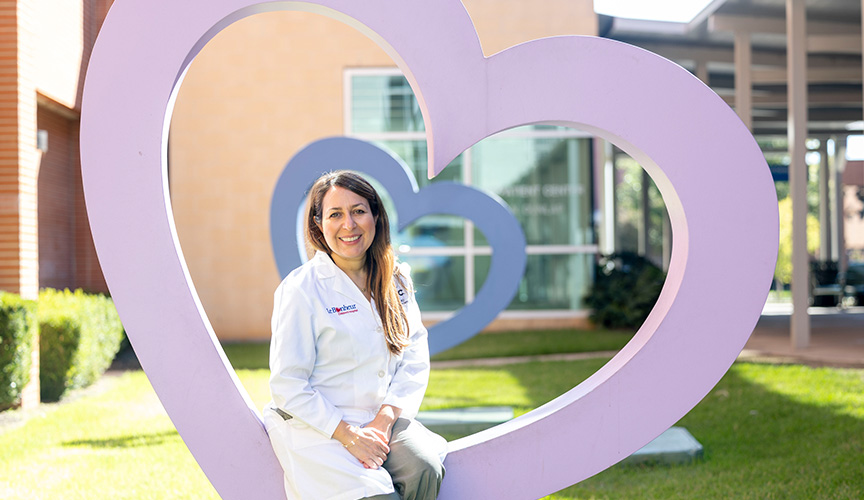
Rima Zahr, DO
Zahr identified four key genetic modifiers associated with CKD risk in SCA — APOL1, HMOX1, BCL11A and alpha-thalassemia — and used them to create two polygenic risk scores (PRS-3 and PRS-4). These scores classify patients into risk categories ranging from low to very high risk.
The research evaluated 324 children and young adults enrolled in the Sickle Cell Clinical Research and Intervention Program (SCCRIP). Both risk scores were strongly associated with persistent albuminuria. Children in the highest-risk categories were 14 to 19 times more likely to develop persistent albuminuria than those in the low-risk groups. The findings were further validated in 253 adults with SCA, where high-risk individuals were 12 times more likely to have persistent albuminuria.
Because people with sickle cell anemia face an increased risk of progressive kidney disease and limited access to kidney transplantation, early identification is critical. Zahr hopes this genetic risk score will enable earlier monitoring, treatment and interventions, ultimately reducing the burden of CKD and improving long-term outcomes for patients with sickle cell anemia.
Help us provide the best care for kids.
Le Bonheur Children's Hospital depends on the generosity of friends like you to help us serve 250,000 children each year, regardless of their family’s ability to pay. Every gift helps us improve the lives of children.
Donate Now